Uncategorized
Cannabis Products: A Complete Guide to Flower, Hash, Concentrates, Edibles and More
Aug
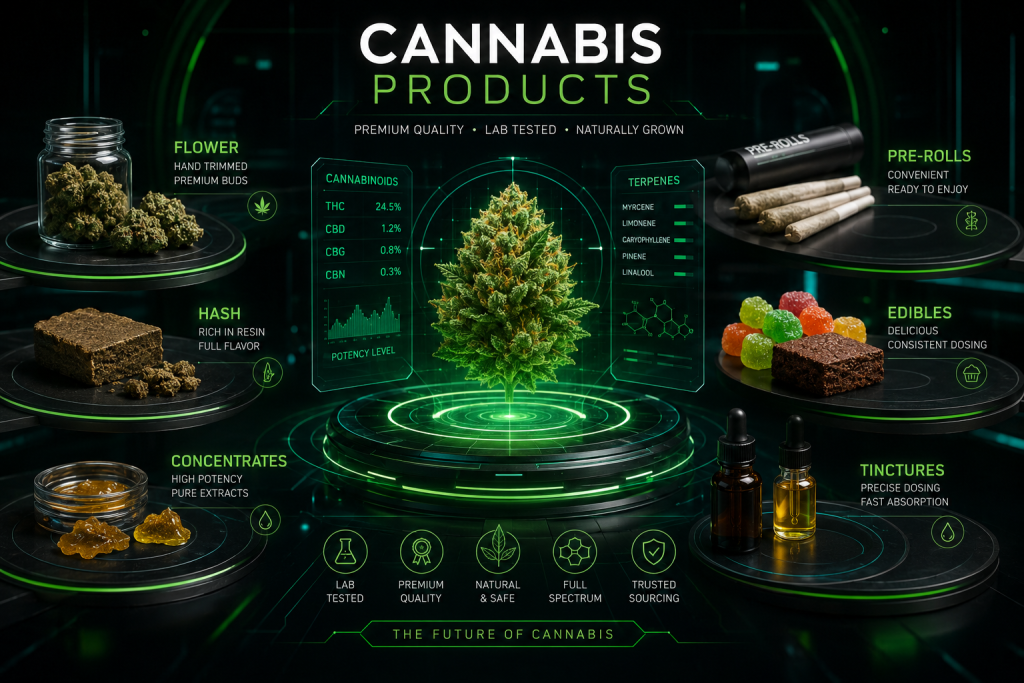
Cannabis products are available in many different forms, and understanding the differences can make it easier to compare products, read labels, and recognize important quality information. From traditional cannabis flower and hash to concentrates, pre-rolls, edibles, oils, and tinctures, each category has its own characteristics.
For consumers researching cannabis products, the product name alone rarely tells the complete story. Factors such as cannabinoid content, terpene profile, appearance, aroma, texture, ingredients, packaging, storage, and testing information can all provide additional context.
This guide explores the major types of cannabis products and explains what to look for when comparing them.
What Are Cannabis Products?
Cannabis products are products made from cannabis plant material or compounds derived from cannabis. Depending on the product, they may contain cannabinoids such as THC and CBD, along with naturally occurring aromatic compounds called terpenes.
Modern cannabis products can range from minimally processed flower to highly refined concentrates and formulated products. Processing methods, genetics, cultivation conditions, harvesting, curing, extraction, and storage can all influence the characteristics of the final product.
Because cannabis regulations differ between locations, product availability and purchasing requirements can also vary. Always check the laws and regulations that apply where you live.
Main Types of Cannabis Products
Cannabis Flower
Cannabis flower is one of the most recognizable cannabis products. It consists of the dried flowering portion of the cannabis plant.
Flower can differ considerably in appearance, aroma, texture, density, and cannabinoid composition. Depending on the cultivar and growing conditions, buds may have different shades of green and may feature orange, red, or brown pistils and visible trichomes.
When comparing cannabis flower, useful characteristics include:
- Bud structure
- Color
- Trichome coverage
- Aroma
- Texture
- Moisture level
- Cannabinoid profile
- Terpene profile
- Cultivar or strain name
- Packaging and testing information
The traditional terms indica, sativa, and hybrid are commonly used to categorize cannabis cultivars. However, these labels alone do not describe the complete chemical composition of a product. Cannabinoid and terpene information can provide more specific information.
Cannabis Hash
Hash is a concentrated cannabis product traditionally produced from the resin-rich trichomes of cannabis flowers.
Hash can have different textures depending on the variety and production method. Some forms may be soft and pliable, while others can be firm, dry, or crumbly.
Its color can also vary from light brown or golden shades to darker brown or almost black tones.
When researching hash products, consider:
- Texture
- Color
- Aroma
- Consistency
- Production method, when disclosed
- Cannabinoid information
- Packaging
- Testing information
Proper storage is particularly important because environmental conditions can affect the texture and aromatic characteristics of hash.
Cannabis Concentrates
Cannabis concentrates are products in which cannabinoids and other cannabis compounds have been concentrated through processing or extraction.
There are several concentrate formats, including products commonly described as oils, resins, rosin, and other preparations.
Concentrates can differ significantly in consistency and potency. Therefore, product labels and laboratory information are especially important when available.
When evaluating a concentrate, look for:
- Cannabinoid concentration
- Ingredients
- Extraction or production information
- Batch information
- Testing information
- Storage instructions
- Packaging details
Because concentrate formulations can be substantially more concentrated than traditional flower, consumers should carefully follow applicable product instructions and local regulations.
Cannabis Pre-Rolls
Pre-rolls are cannabis products prepared in a ready-to-use format. They are commonly made with ground cannabis flower and may be sold individually or in multipacks.
The quality and characteristics of a pre-roll depend partly on the flower used to produce it. Product information may include the cultivar name, total weight, cannabinoid content, terpene information, and packaging details.
A clear product description should explain what is contained in the pre-roll rather than relying solely on the product name.
Cannabis Edibles
Cannabis edibles are food or beverage products containing cannabis compounds.
Common examples include gummies, chocolates, baked products, beverages, and other prepared foods. Because these products are consumed rather than inhaled, their characteristics and instructions differ from those of flower or concentrates.
Labels may provide information about:
- Total THC
- THC per serving
- CBD content
- Serving size
- Ingredients
- Allergens
- Storage requirements
- Manufacturing information
Edibles should always be stored securely and away from children and pets.
Cannabis Tinctures and Oils
Cannabis tinctures and oils are liquid products that may contain specific cannabinoids combined with a carrier ingredient.
Product packaging can provide information about cannabinoid concentration, ingredients, serving information, and storage.
When comparing these products, it is useful to look beyond the product name and review the complete ingredient and cannabinoid information.
Understanding THC and CBD
THC and CBD are two of the best-known cannabinoids found naturally in cannabis.
THC, or tetrahydrocannabinol, is the cannabinoid most commonly associated with cannabis’s intoxicating effects.
CBD, or cannabidiol, is another naturally occurring cannabinoid and does not produce the same intoxicating effect as THC.
Cannabis products can contain different concentrations and ratios of THC and CBD. Consequently, two products that appear similar can have significantly different cannabinoid profiles.
When available, verified laboratory results and product labels provide more useful information than assumptions based solely on a strain name.
What Are Cannabis Terpenes?
Terpenes are naturally occurring aromatic compounds found throughout the plant kingdom, including cannabis.
They contribute to the aroma and flavor characteristics associated with different cannabis cultivars.
Some commonly discussed cannabis terpenes include:
Myrcene
Myrcene is frequently associated with earthy, herbal, and musky aromatic characteristics.
Limonene
Limonene is commonly associated with citrus-like aromas.
Caryophyllene
Caryophyllene can contribute spicy, peppery, and woody characteristics.
Pinene
As its name suggests, pinene is commonly associated with pine-like aromas.
Linalool
Linalool is often associated with floral and lavender-like aromatic characteristics.
The actual terpene composition of a product depends on its genetics, cultivation, processing, and storage. Therefore, a product’s laboratory results can provide more reliable information than a general strain description.
How to Compare Cannabis Products
Comparing cannabis products becomes easier when you use consistent criteria.
1. Identify the Product Type
First determine whether you are looking at flower, hash, concentrate, pre-rolls, edibles, tinctures, or another cannabis format.
Each category has different characteristics and labeling requirements.
2. Check Cannabinoid Information
Look for THC, CBD, and other cannabinoid information when available.
Do not assume that two products with similar names have identical cannabinoid profiles.
3. Review the Terpene Profile
Terpene information can help explain differences in aroma and flavor.
When laboratory results are available, they can provide more precise information about the compounds present in a particular product.
4. Examine Appearance and Texture
For flower and hash, appearance and texture can provide useful information.
Consider:
- Color
- Structure
- Trichome visibility
- Density
- Moisture
- Consistency
These characteristics should be considered alongside other product information rather than used as the sole measure of quality.
5. Review the Packaging
Packaging should provide clear information appropriate to the product and applicable regulations.
Depending on the product and jurisdiction, information may include weight, cannabinoid content, ingredients, batch information, testing details, warnings, and storage instructions.
What Makes Cannabis Flower Different From Other Products?
Cannabis flower is minimally processed compared with many other cannabis products. As a result, its natural physical characteristics are easier to observe.
The appearance of flower can be influenced by genetics, cultivation conditions, harvesting, drying, curing, trimming, and storage.
A well-presented flower description should therefore discuss more than simply whether the product is indica, sativa, or hybrid.
Useful information includes:
- Cultivar name
- Genetics when reliably documented
- Appearance
- Aroma
- Flavor profile
- Cannabinoid information
- Terpene information
- Bud structure
- Packaging
- Storage recommendations
This provides readers with a clearer understanding of what they are considering.
How Cannabis Products Should Be Stored
Storage can have a significant impact on the condition of cannabis products.
For cannabis flower, excessive heat, light, moisture, and prolonged exposure to air can negatively affect quality over time.
A suitable storage environment should generally be:
- Cool
- Dry
- Dark
- Secure
- Protected from excessive air exposure
Cannabis products should also be kept away from children and pets.
Different products may require different storage conditions, so the manufacturer’s instructions should always take priority.
Why Cannabis Product Quality Can Vary
Two products within the same category can have noticeably different characteristics.
For flower, differences can result from genetics, growing conditions, harvesting, drying, curing, trimming, transportation, and storage.
For hash and concentrates, production and extraction methods can influence texture, appearance, aroma, and cannabinoid concentration.
For edibles and tinctures, ingredients, formulation, manufacturing processes, and storage can affect the final product.
This is why reliable product information is valuable when comparing cannabis products.
What Should a Good Cannabis Product Description Include?
A useful cannabis product description should give readers practical information without relying on exaggerated claims.
Product Name
The product or cultivar should be clearly identified.
Product Type
Explain whether the product is flower, hash, concentrate, edible, pre-roll, tincture, or another format.
Appearance
Describe visible characteristics such as color, structure, texture, and trichome coverage when appropriate.
Aroma and Flavor
Explain the naturally occurring aromatic characteristics associated with the product.
Cannabinoid Profile
Provide verified THC, CBD, and other cannabinoid information where available.
Terpene Profile
List reported terpenes when reliable information is available and explain their contribution to aroma and flavor.
Weight and Packaging
Clearly state the quantity and relevant packaging information.
Testing Information
If legitimate laboratory testing is available, provide accurate testing information rather than making unsupported claims about purity or potency.
Reading a Cannabis Product Label
Product labels can contain some of the most useful information available to consumers.
Depending on the product and location, look for:
- Product name
- Product category
- Net weight or volume
- THC concentration
- CBD concentration
- Ingredients
- Batch or lot number
- Laboratory testing information
- Packaging date
- Expiration or best-before information where applicable
- Required warnings
- Storage instructions
Reading the complete label is generally more useful than relying on promotional wording.
Cannabis Products and Responsible Information
Cannabis laws vary significantly between countries, states, provinces, and other jurisdictions.
Rules may address:
- Legal age
- Possession
- Purchase
- Cultivation
- Product types
- THC limits
- Packaging
- Advertising
- Transportation
- Consumption locations
Before purchasing, possessing, transporting, or using cannabis, check the regulations that apply to your location.
Cannabis products should also be kept securely away from children and pets. Driving or operating machinery while impaired can create serious safety risks.
How to Choose Between Different Cannabis Products
There is no single cannabis product that is appropriate for every consumer or situation.
Instead, comparing products should begin with the characteristics that matter most to you.
For flower, you might compare appearance, aroma, cannabinoid information, terpene profile, freshness, packaging, and available testing information.
For edibles, you may pay closer attention to ingredients, cannabinoid amounts, serving information, packaging, and storage.
For concentrates, cannabinoid concentration, product composition, processing information, and storage can be particularly important.
The key is to make comparisons using reliable information instead of choosing solely based on product names or marketing claims.
Frequently Asked Questions About Cannabis Products
What are the main types of cannabis products?
Common categories include cannabis flower, hash, concentrates, pre-rolls, edibles, tinctures, oils, and beverages. Availability depends on local laws and regulations.
What is the difference between cannabis flower and hash?
Cannabis flower consists of dried cannabis buds, while hash is produced by collecting and concentrating resin-rich trichomes from cannabis plants.
What are THC and CBD?
THC and CBD are naturally occurring cannabinoids. THC is associated with intoxicating effects, while CBD does not produce the same intoxicating effect.
What are cannabis terpenes?
Terpenes are aromatic compounds that contribute to the smell and flavor characteristics of cannabis and many other plants.
Does the cannabis strain name tell you everything about a product?
No. A strain or cultivar name does not provide a complete description of a product’s cannabinoid concentration, terpene profile, cultivation, processing, or storage.
How should cannabis flower be stored?
Cannabis flower should generally be protected from excessive heat, moisture, light, and air. A cool, dry, dark, secure environment is generally preferable.
Why can two products with the same strain name be different?
Products can differ because of genetics, cultivation methods, harvest timing, drying, curing, processing, testing, packaging, and storage.
What should I check before choosing a cannabis product?
Review the product type, cannabinoid information, ingredients where applicable, terpene information, weight, packaging, testing information, storage instructions, and local legal requirements.
Final Thoughts
Cannabis products now cover a broad range of formats, from traditional flower and hash to concentrates, pre-rolls, edibles, tinctures, and oils. Each category has different characteristics, so understanding the basics can make product research much easier.
Rather than focusing only on a product name, consider the complete picture. Look at the product type, appearance, aroma, cannabinoid profile, terpene information, ingredients, packaging, testing information, and storage requirements.
For Bulk Bud Supply, this broader approach also provides a useful foundation for exploring individual cannabis strains and product categories in greater detail. As you continue researching cannabis products, reliable information and awareness of applicable regulations remain important.
