Uncategorized
High-Quality Cannabis: How to Recognize Quality Flower and Understand Product Standards
Aug
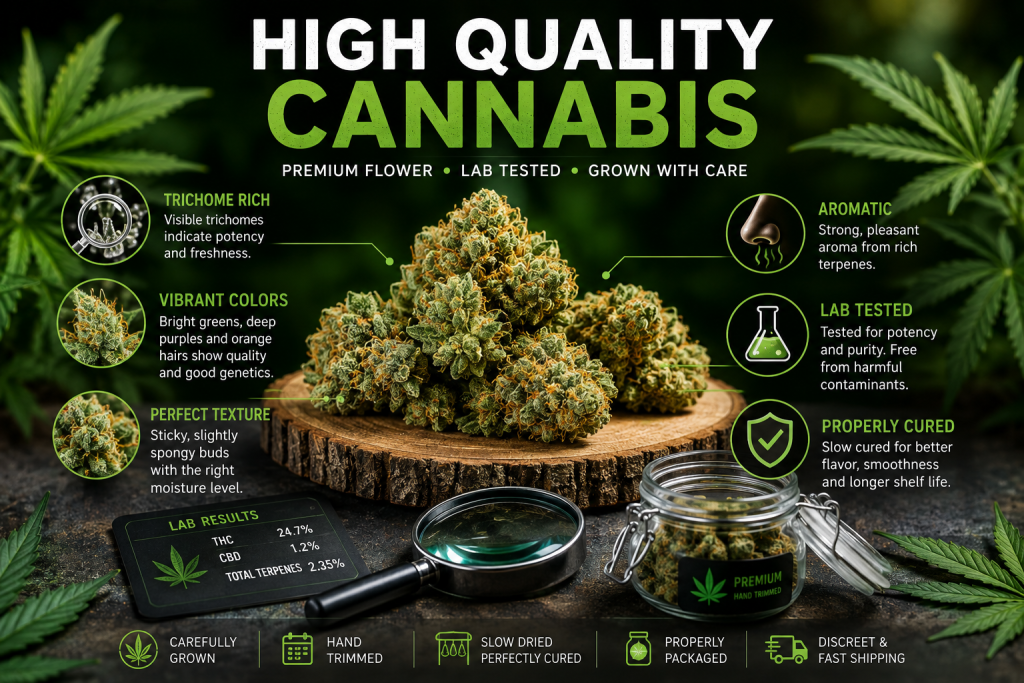
High-quality cannabis is often described using words such as fresh, aromatic, resinous, dense, or premium. However, appearance alone does not tell the complete story. A well-informed evaluation considers several characteristics, including cultivation, harvesting, drying, curing, cannabinoid content, terpene composition, storage, packaging, and laboratory testing where available.
For anyone researching cannabis products, understanding these factors can make product descriptions easier to interpret and help separate useful information from simple marketing language.
This guide explains what high-quality cannabis can look like, what characteristics deserve attention, and how to evaluate cannabis flower using a more complete approach.
What Does High-Quality Cannabis Mean?
There is no single feature that automatically makes cannabis high quality.
Instead, quality is better understood as a combination of characteristics that indicate the product has been properly cultivated, harvested, processed, stored, and presented.
Important factors can include:
- Genetics and cultivar
- Growing conditions
- Harvest timing
- Drying
- Curing
- Aroma
- Appearance
- Trichome development
- Texture
- Cannabinoid profile
- Terpene profile
- Laboratory testing
- Packaging
- Storage conditions
- Freshness and overall condition
A visually attractive product can still have problems if it was improperly dried or stored. Likewise, a product that does not have an especially dramatic appearance may still have a well-preserved cannabinoid and terpene profile.
Therefore, evaluating several characteristics together is more useful than focusing on one feature.
Why Cannabis Quality Matters
Cannabis flower is an agricultural product, and its characteristics can change throughout cultivation, processing, transportation, and storage.
Poor handling can affect aroma, texture, appearance, and overall condition. Excessive moisture can create an unsuitable environment for microbial growth, while excessive dryness can affect texture and the preservation of aromatic compounds.
Light, heat, oxygen, and improper storage can also contribute to changes over time.
For these reasons, quality assessment should begin with the entire journey of the product rather than its final appearance alone.
Appearance of High-Quality Cannabis Flower
Appearance is usually one of the first characteristics people notice.
High-quality cannabis flower may have well-developed buds with visible trichomes and relatively consistent structure. However, visual appearance can vary significantly between cultivars.
Color
Healthy cannabis flower can display different shades of green. Depending on genetics and growing conditions, some cultivars can also show purple, orange, red, or other natural color variations.
Color alone should not be treated as a definitive quality indicator.
Very brown, excessively dark, or visibly deteriorated material may deserve closer examination, particularly when the appearance is accompanied by an unusual odor or poor texture.
Trichomes
Trichomes are tiny structures found on cannabis flowers. They are responsible for producing many of the plant’s cannabinoids and aromatic compounds.
A strong presence of visible trichomes can be an interesting characteristic when evaluating flower.
However, more visible trichomes do not automatically mean a product is better. Trichome preservation and the overall cannabinoid and terpene profile are more informative when reliable testing is available.
Bud Structure
Cannabis cultivars can naturally produce different bud structures.
Some may have compact, dense flowers, while others may produce more open or elongated buds.
Therefore, density should not be used as the only measure of quality.
The important consideration is whether the flower appears properly developed, well preserved, and free from obvious contamination or deterioration.
Aroma and the Importance of Terpenes
Aroma is another important characteristic of cannabis flower.
The smell comes largely from volatile compounds, particularly terpenes and other aromatic constituents.
Different cultivars can produce aromas described as:
- Citrus
- Berry
- Floral
- Earthy
- Pine
- Herbal
- Spicy
- Sweet
- Tropical
- Woody
A strong and recognizable aroma can indicate that aromatic compounds have been preserved, although smell alone cannot prove potency or overall quality.
Common Cannabis Terpenes
Several terpenes are frequently discussed when describing cannabis.
Myrcene
Myrcene is commonly associated with earthy, herbal, and musky aromatic notes.
Limonene
Limonene is associated with citrus-like characteristics.
Caryophyllene
Caryophyllene can contribute peppery and spicy notes.
Pinene
Pinene is commonly associated with pine-like aromas.
Linalool
Linalool is often associated with floral and lavender-like characteristics.
A cannabis product’s actual terpene composition can vary depending on genetics, cultivation, harvesting, drying, curing, and storage.
Texture and Moisture
Texture can reveal useful information about how cannabis has been handled.
High-quality flower should generally have a balanced texture rather than being extremely wet or excessively brittle.
Excessive Moisture
Flower that is unusually damp may require closer attention because inappropriate moisture conditions can increase the risk of microbial problems.
Excessive Dryness
Very dry flower can become brittle and may lose some of its aromatic character more quickly.
The goal is not simply to find the driest or softest product. Instead, proper post-harvest handling and storage are important for preserving the flower’s overall condition.
The Importance of Drying and Curing
Drying and curing are important stages in cannabis production.
After harvesting, cannabis flower contains significant moisture and needs appropriate post-harvest handling.
Drying
Controlled drying helps reduce moisture while preserving desirable physical and aromatic characteristics.
Drying too quickly or under unsuitable conditions can affect the final texture and aroma.
Curing
Curing is a subsequent process that allows the flower to stabilize after drying.
Proper curing can influence aroma, texture, and the overall presentation of the finished flower.
These processes are often overlooked in basic product descriptions, yet they can make a meaningful difference to the final characteristics of cannabis flower.
Cannabinoid Content and Laboratory Testing
Cannabinoids are another important part of evaluating cannabis.
THC and CBD are among the most widely discussed cannabinoids, although cannabis contains many others.
A product’s cannabinoid profile can vary considerably depending on its genetics and production.
When laboratory testing is available, it can provide more useful information than general statements such as “strong,” “potent,” or “premium.”
Testing may provide information about:
- THC
- THCA
- CBD
- CBDA
- CBG
- CBN
- Other cannabinoids
- Terpenes
- Contaminants, depending on the testing panel
Laboratory results should come from legitimate testing sources, and consumers should be able to distinguish verified information from unsupported marketing claims.
What Laboratory Testing Can Tell You
Laboratory testing can provide a more objective picture of a cannabis product.
Depending on the jurisdiction and laboratory, testing may evaluate cannabinoid concentration, terpene composition, microbial contamination, pesticides, heavy metals, residual solvents, and other factors.
Not every test panel evaluates every possible contaminant, so it is important to understand what the specific report actually covers.
A trustworthy product description should not claim that a product is “lab tested” unless legitimate testing documentation exists.
High-Quality Cannabis and Clean Appearance
A clean appearance is another characteristic worth considering.
Cannabis flower should not show obvious signs of contamination, mold, insects, or foreign material.
Consumers should be particularly cautious with products showing unusual fuzzy growth, unexpected discoloration, or an abnormal smell that suggests deterioration.
If cannabis appears contaminated or spoiled, it should not be used.
Packaging and Product Protection
Good packaging is more than an attractive label.
Packaging can help protect cannabis from light, air, moisture, physical damage, and environmental exposure.
A useful package should also provide relevant product information required by applicable regulations.
Depending on location and product type, this may include:
- Product name
- Net weight
- Cannabinoid information
- Ingredients
- Batch number
- Testing information
- Packaging date
- Required warnings
- Storage instructions
Packaging should also be secure and appropriate for protecting the product.
How Storage Affects Cannabis Quality
Even well-produced cannabis can lose quality if it is stored incorrectly.
Environmental conditions such as heat, light, moisture, and air exposure can influence the condition of cannabis over time.
For many cannabis flower products, a cool, dark, dry, secure environment is preferable.
Excessive heat can accelerate changes in the product, while excessive moisture can create unwanted conditions.
Proper storage also means keeping cannabis away from children and pets.
High-Quality Cannabis vs. Marketing Language
The word “premium” appears frequently in cannabis marketing.
However, marketing language should not replace measurable information.
For example, a description saying:
“Premium, ultra-potent, top-shelf cannabis”
does not provide much useful information without supporting details.
A stronger description would explain:
- Cultivar
- Appearance
- Aroma
- Cannabinoid profile
- Terpene information
- Weight
- Testing
- Packaging
- Storage
- Production information where available
This approach allows readers to evaluate the product based on actual characteristics rather than promotional language.
How to Evaluate Cannabis Quality Step by Step
A simple evaluation process can make comparison easier.
Step 1: Check the Product Identity
Confirm the product name, cultivar, type, and package size.
Step 2: Examine the Appearance
Look at color, structure, trichome development, and overall condition.
Step 3: Consider the Aroma
A healthy and well-preserved product may have a recognizable botanical aroma. An unusual or unpleasant odor can indicate a problem.
Step 4: Check Texture
Look for an appropriate balance rather than extremely wet or excessively brittle flower.
Step 5: Review Cannabinoid Information
Check the available THC, CBD, and other cannabinoid information.
Step 6: Review Terpene Information
When available, laboratory terpene results can help explain the product’s aromatic profile.
Step 7: Look for Testing Information
Check whether legitimate laboratory results are available and what the testing actually covers.
Step 8: Examine Packaging
Make sure the product is appropriately packaged and the relevant information is clearly presented.
Step 9: Consider Storage
Review the recommended storage conditions and consider whether the product appears to have been properly protected.
Common Mistakes When Judging Cannabis Quality
Judging Quality Only by THC
High THC does not automatically mean a cannabis product is superior.
Cannabinoid concentration is only one part of the overall product profile.
Assuming More Trichomes Always Means Better
Visible trichomes can be a desirable characteristic, but quality involves much more than appearance.
Assuming Color Determines Quality
Different cultivars naturally have different colors.
Ignoring Storage
Even well-cultivated flower can deteriorate when exposed to unsuitable storage conditions.
Trusting Every “Premium” Claim
Look for supporting information rather than relying entirely on marketing terminology.
Building a Better Cannabis Product Description
For cannabis websites, detailed product descriptions can be more useful when they focus on verifiable characteristics.
A strong description can include:
Product type: Flower, hash, concentrate, or another category.
Cultivar: The specific cultivar or commonly used strain name.
Appearance: Color, structure, and trichome characteristics.
Aroma: The dominant aromatic notes.
Cannabinoids: Verified cannabinoid information.
Terpenes: Reported terpene profile when available.
Processing: Drying, curing, or processing information when documented.
Testing: Legitimate laboratory information.
Packaging: How the product is protected and presented.
Storage: Recommended environmental conditions.
This structure helps readers understand the product without depending on exaggerated claims.
Frequently Asked Questions About High-Quality Cannabis
What makes cannabis high quality?
Quality is influenced by genetics, cultivation, harvesting, drying, curing, cannabinoid and terpene composition, storage, packaging, and testing. No single characteristic determines quality.
Does high THC mean higher-quality cannabis?
No. THC concentration is only one measurement. A complete evaluation should also consider aroma, terpene composition, cultivation, processing, storage, and testing.
What should high-quality cannabis flower look like?
Appearance varies by cultivar, but well-preserved flower may have developed buds, visible trichomes, consistent structure, and no obvious signs of contamination or deterioration.
Should cannabis have a strong smell?
Cannabis can have a noticeable aroma because of its terpenes and other volatile compounds. Aroma intensity alone, however, does not prove quality or potency.
What are trichomes?
Trichomes are small structures on cannabis plants that produce many cannabinoids and aromatic compounds.
How does curing affect cannabis?
Curing is a post-harvest process that helps stabilize dried flower and can influence its aroma, texture, and overall characteristics.
Can cannabis become too dry?
Yes. Excessively dry flower can become brittle and may lose some aromatic characteristics more quickly.
How should cannabis flower be stored?
It should generally be protected from excessive light, heat, moisture, and air exposure and stored securely away from children and pets. Follow the product’s specific storage instructions.
Is laboratory testing important?
Laboratory testing can provide objective information about cannabinoids, terpenes, and, depending on the testing panel, potential contaminants. Legitimate testing is more informative than unsupported quality claims.
Final Thoughts
High-quality cannabis should be evaluated as a complete product rather than judged by one characteristic. Appearance, aroma, texture, trichomes, cannabinoid content, terpene composition, drying and curing, packaging, storage, and laboratory testing can all contribute to a more informed assessment.
For consumers researching cannabis products, the most useful approach is to look for clear, verifiable information and avoid relying solely on terms such as “premium” or “top shelf.”
For cannabis businesses and educational websites, detailed and accurate product information can also create a better experience for readers. Explaining what makes a product different, how it is processed, how it should be stored, and what testing information is available provides considerably more value than simply repeating promotional claims.
Cannabis laws and product standards vary by jurisdiction, so always check applicable local regulations before purchasing, possessing, transporting, or using cannabis products.
